
Engineering Guide
Explosion Proof Junction Box vs Distribution Box: What’s the Difference?
When choosing electrical boxes for a hazardous area, junction boxes and distribution boxes can look much alike. A metal housing, cover and cable entries tell you little about the work the box will do.
The main difference is inside. An Explosion Proof Junction Box primarily connects conductors. An Explosion Proof Distribution Box incorporates the switching and protective devices specified for power distribution. If the project also needs motor starting or stopping, those functions can be considered as part of the distribution arrangement.
Where would you use each box?
| Comparison | Explosion Proof Junction Box | Explosion Proof Distribution Box |
|---|---|---|
| Main purpose | Cable connections, terminations and branches | Power distribution, circuit switching and protection |
| Typical contents | Terminal blocks and associated connection components | Circuit breakers, internal wiring and control devices where required |
| Example applications | Field cable connections; control and communication wiring | Lighting circuits, equipment supplies and distribution with motor control |
| Selection priorities | Connection count, conductor sizes, terminal layout and cable entries | Voltage, current, outgoing circuits, loads and protection requirements |
Both can include branch connections. Terminals provide connection points; circuit breakers and other devices provide their specified switching and protection functions. The configuration should match the tasks shown on the electrical drawing.
Junction boxes: a place to connect field wiring
An Explosion Proof Junction Box provides a central connection point where field cables need to be joined or branched. Applications include lighting, power, control and communication circuits.
A typical terminal-equipped junction box contains terminal blocks arranged for the required connections. Where several field cables connect to onward wiring, for example, the connection points can be grouped inside the box, with cable entries positioned to suit the cable routes.
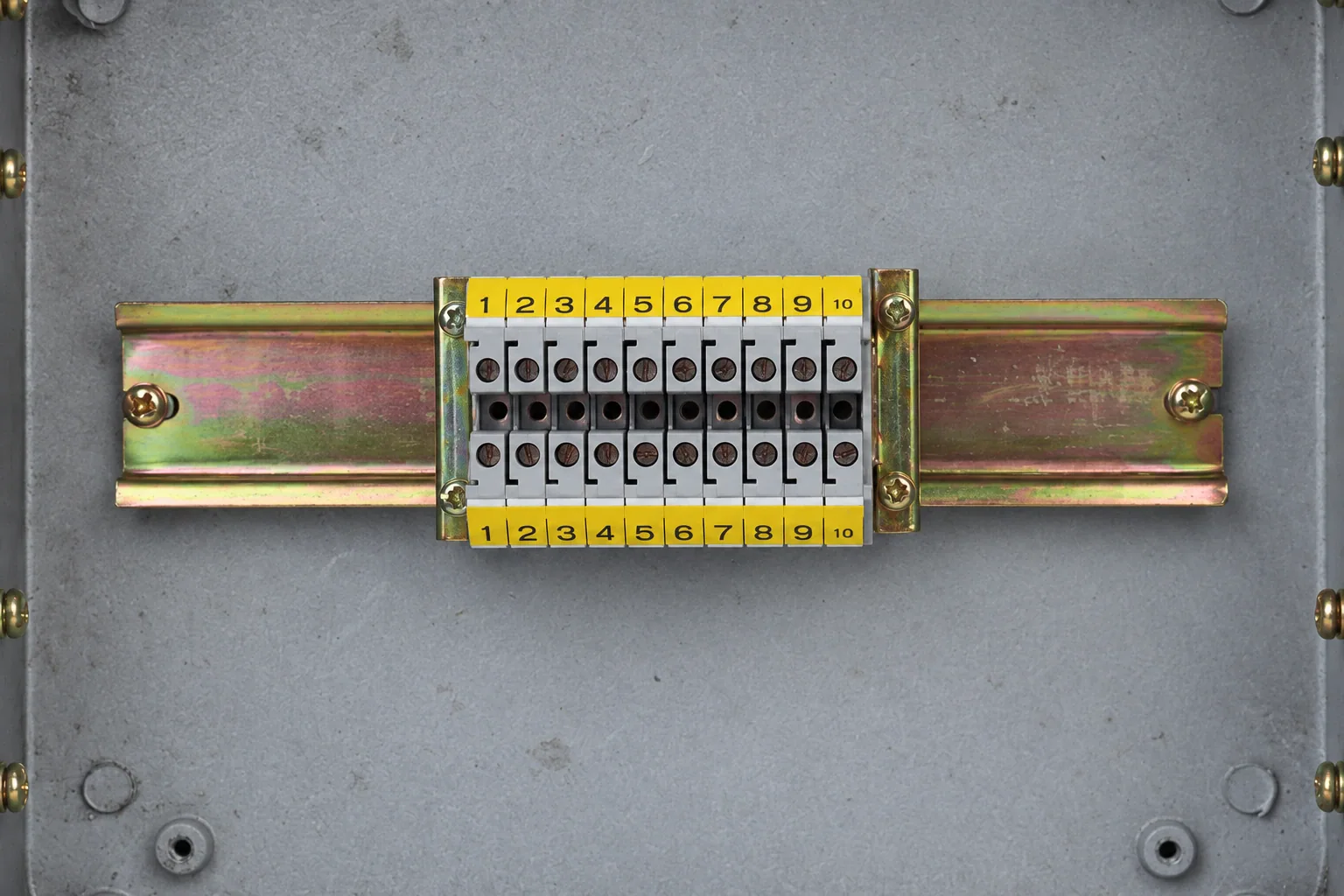
Allow suitable space for the terminals and for making the connections. Establishing the connection count and conductor sizes before choosing the enclosure dimensions helps you plan a workable terminal and entry layout.
A terminal-equipped junction box does not itself provide circuit-breaker overload or short-circuit protection. Where those functions are needed, include the appropriate protective devices in the distribution design.
Explore Explosion Proof Junction Boxes
Distribution boxes: supply and protect outgoing circuits
An installation supplying lighting and several pieces of equipment needs more than connection points. Each circuit needs its intended switching and protection arrangement. An Explosion Proof Distribution Box brings these functions together in one assembly.
Depending on the loads and circuit requirements, the assembly can use miniature or moulded-case circuit breakers for overload and short-circuit protection. Additional functions, such as residual-current protection, are selected to suit the project.
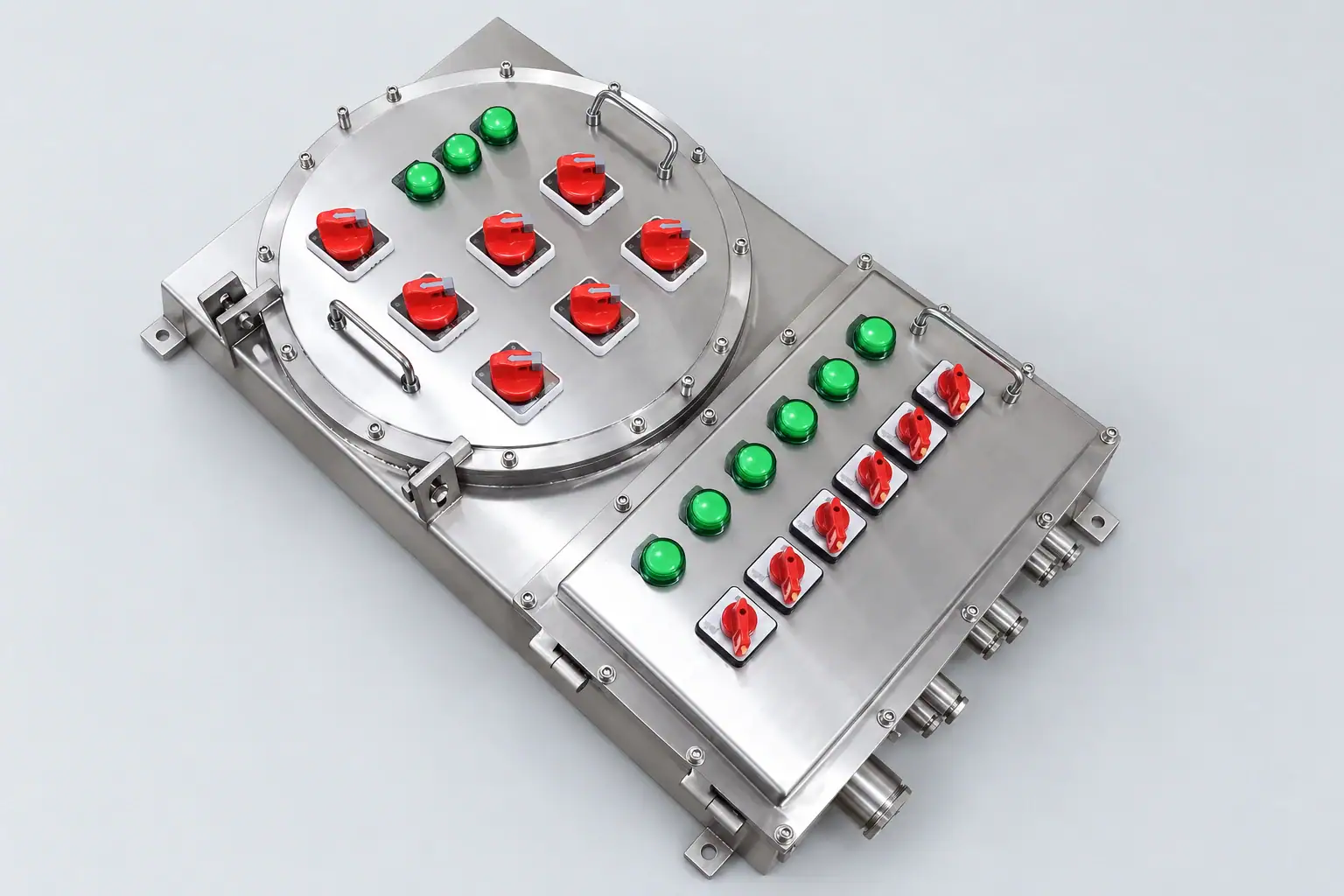
For motor loads, the arrangement can also incorporate contactors, thermal relays, buttons and indicator lights to provide the required starting, stopping or reversing functions. One assembly can therefore handle both distribution and control, according to its circuit design and component selection.
Include the incoming supply, outgoing circuits and load information with your enquiry to help establish the component arrangement and enclosure space required.
Explore Explosion Proof Distribution Boxes
Why do some distribution boxes have several compartments?
The terms junction box and distribution box describe their purpose. Protection methods such as flameproof and increased safety have their own construction requirements. Junction boxes are available in both forms, while distribution assemblies can combine protection methods.
Flameproof equipment compartment with increased safety connection compartments
This arrangement places switching devices in a flameproof compartment and the specified busbar or terminal connections in increased safety compartments. Depending on the design, the connection sections may be described as busbar, terminal, incoming or outgoing compartments.
A distribution box can therefore consist of several functional compartments. Selection involves the space for the devices and the layout of the connection sections, rather than the overall enclosure dimensions alone.
Increased safety enclosure with Ex components
Another arrangement uses an increased safety enclosure containing explosion-protected circuit breakers, contactors and other components selected for that design.
The protection depends on the enclosure and the internal components working as an intended assembly. Putting an ordinary switching device inside an increased safety enclosure does not, by itself, give that device the required explosion protection.
These arrangements suit different product designs; they are not a single construction used by every distribution box. For more about the protection methods, read Ex d vs Ex e.
Do you need an empty enclosure or an equipped assembly?
If you build panels or supply equipment and already have an electrical design, you may need an Explosion Proof Enclosure for further assembly. The discussion can then focus on the internal layout, mounting provisions, usable space and cable entries.
If you need a junction box fitted with terminals, or a distribution assembly with switching devices, protection and internal wiring, identify those items in the supply scope. List accessories such as mounting plates, terminal rails and cable entry devices as well.
An empty enclosure, a terminal-equipped junction box and a configured distribution assembly may have similar external appearances, but include different parts and assembly work. A clear supply scope makes the proposals and prices comparable.
Explore Explosion Proof Enclosures
Choose a box for your project
Start with the task: connecting field wiring, supplying several circuits or also controlling a motor. The required configuration then helps determine the protection structure, enclosure size and cable entry layout.
Send ExCtrl an electrical drawing or a short description of the application. Indicate whether you need an empty enclosure, a terminal-equipped box or a complete distribution assembly so we can discuss an appropriate arrangement for your project.
Specific configurations and suitability depend on the equipment documentation and project requirements. Further assembly of an empty enclosure must follow the applicable design and assessment requirements.